Wind-damaged shingles sometimes turn up in the driveway before you see a single drip indoors. On March 31, the National Weather Service station in Grand Rapids logged thunder and a 58 mph peak wind. If you live in Holland or Zeeland, the wind at your house may have been different. What matters now is whether you can spot a gap on your own roof and tell a roofer where to look.
Start with two photos from the yard
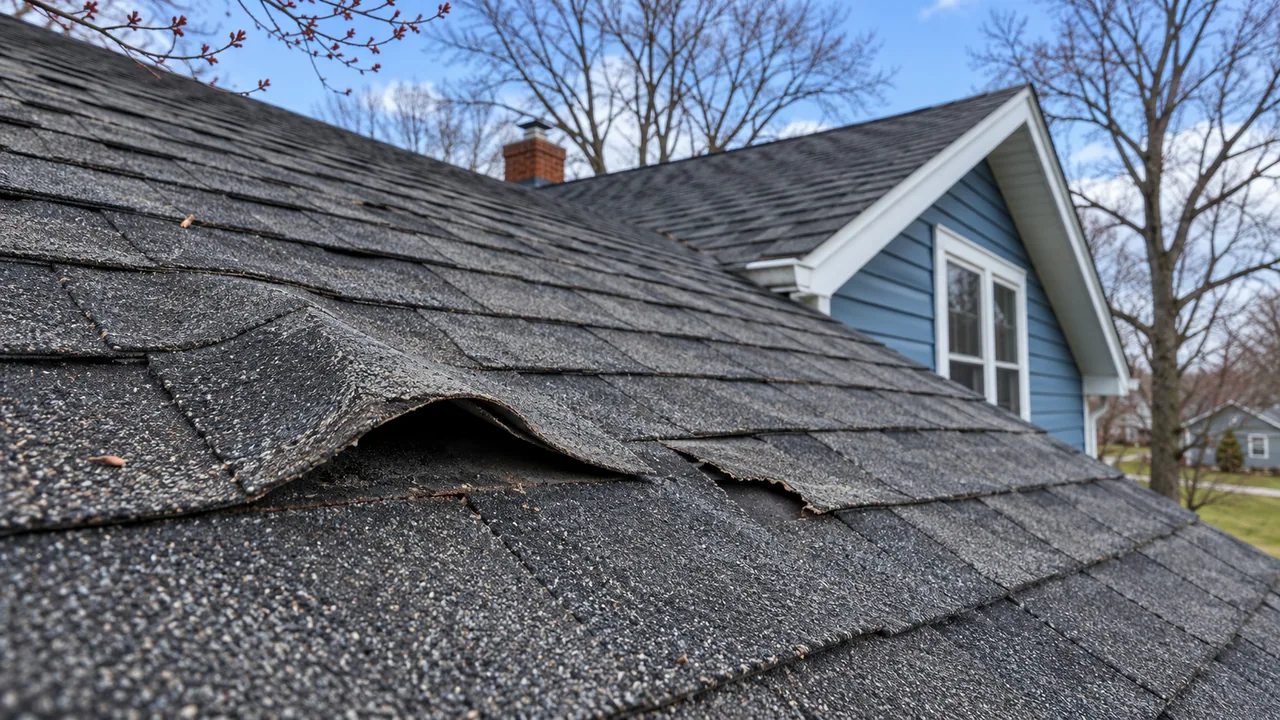
Wait until the weather clears. From the driveway or sidewalk, take one picture of the whole roof slope, then zoom in on the irregular patch. Include something fixed in the frame, such as the chimney or the upstairs window. A close-up of a dark patch is much easier to place when someone can also see which side of the house it came from.
Look along the rake, the sloping edge at the end of the house, and across the ridge. A broken tab can leave a straight-edged gap. A cap shingle can twist out of line. A loose scrap in a shared driveway could have come from next door, so photograph it where you found it before assuming it belongs to your roof. Leave lifting tabs and checking their seals to the roofer.
What wind-damaged shingles can tell a roofer
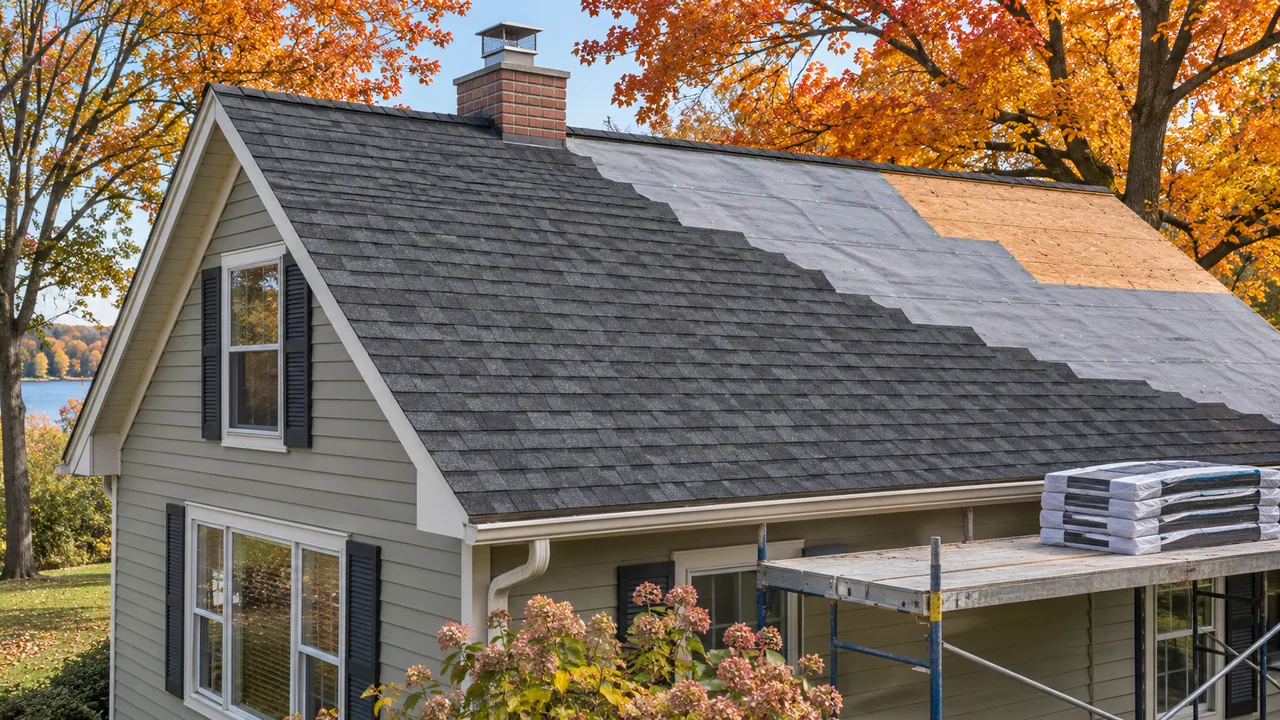
Ask for a photo of the exposed layer and a separate picture of the surrounding shingles. A small bare area on an otherwise sound slope may lend itself to repair. If the shingles on either side are brittle enough to crack when lifted, the repair may need to extend beyond the gap. Ask the estimator to show you that difference and explain how closely replacement shingles will match.
When to call the same day
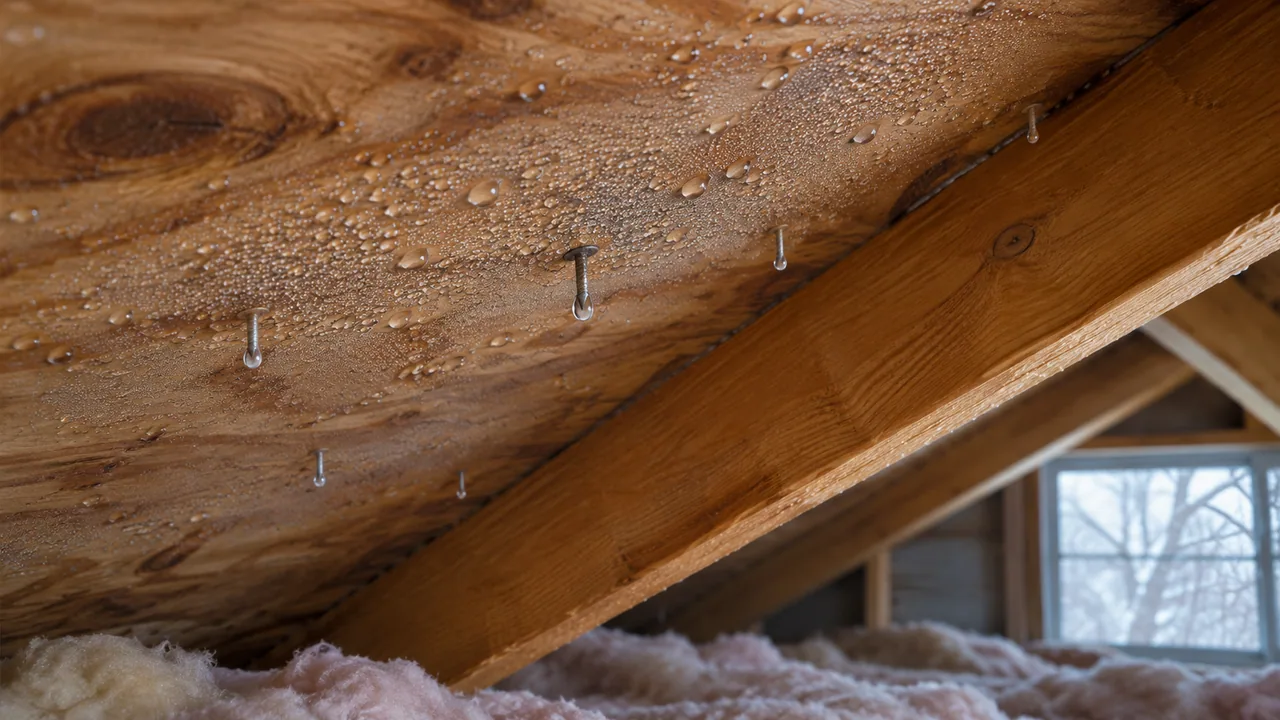
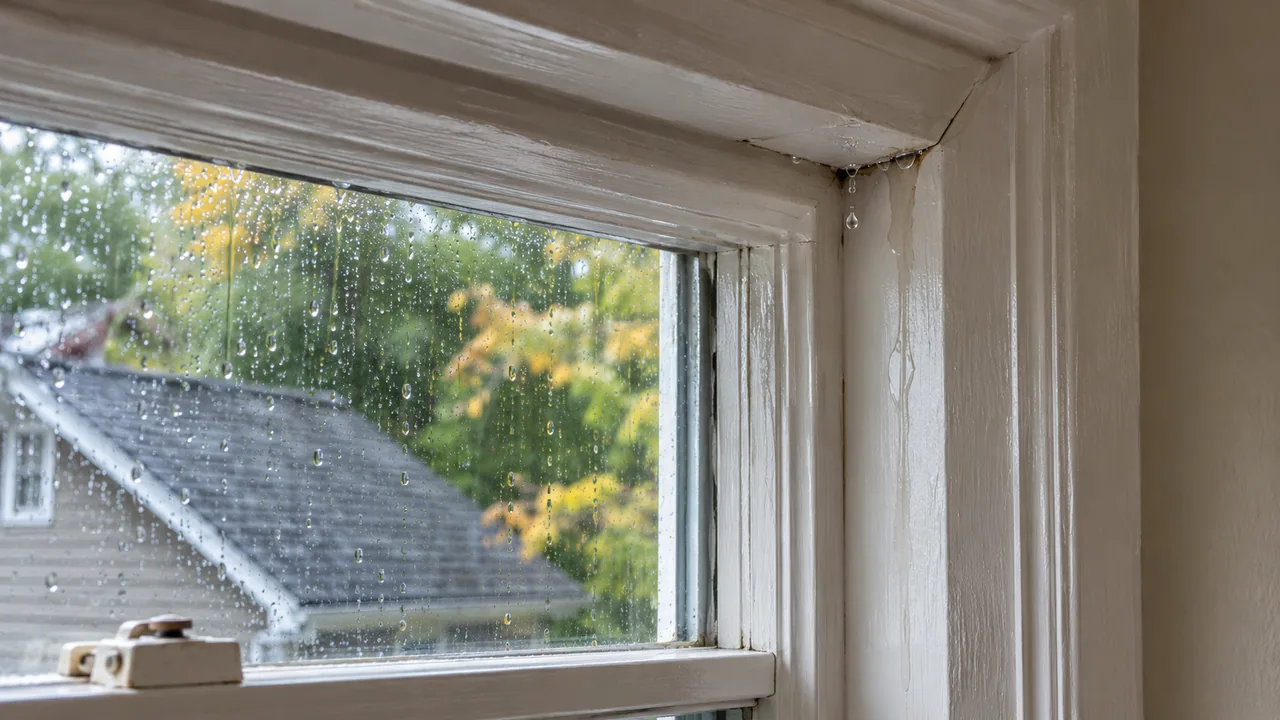
If you can see roof decking, water is dripping indoors, or a branch is resting on the roof, call from a safe spot and describe what you see. Avoid the area beneath a sagging ceiling. A stain near a chimney with no visible missing shingles is a different clue. Our guide to roof flashing repair explains why water can show up several feet from its entry point.
Horizon’s residential roofing team can use those wide and close photos to plan an inspection. Tell us which direction the damaged slope faces and whether the room below stayed dry during the next rain.