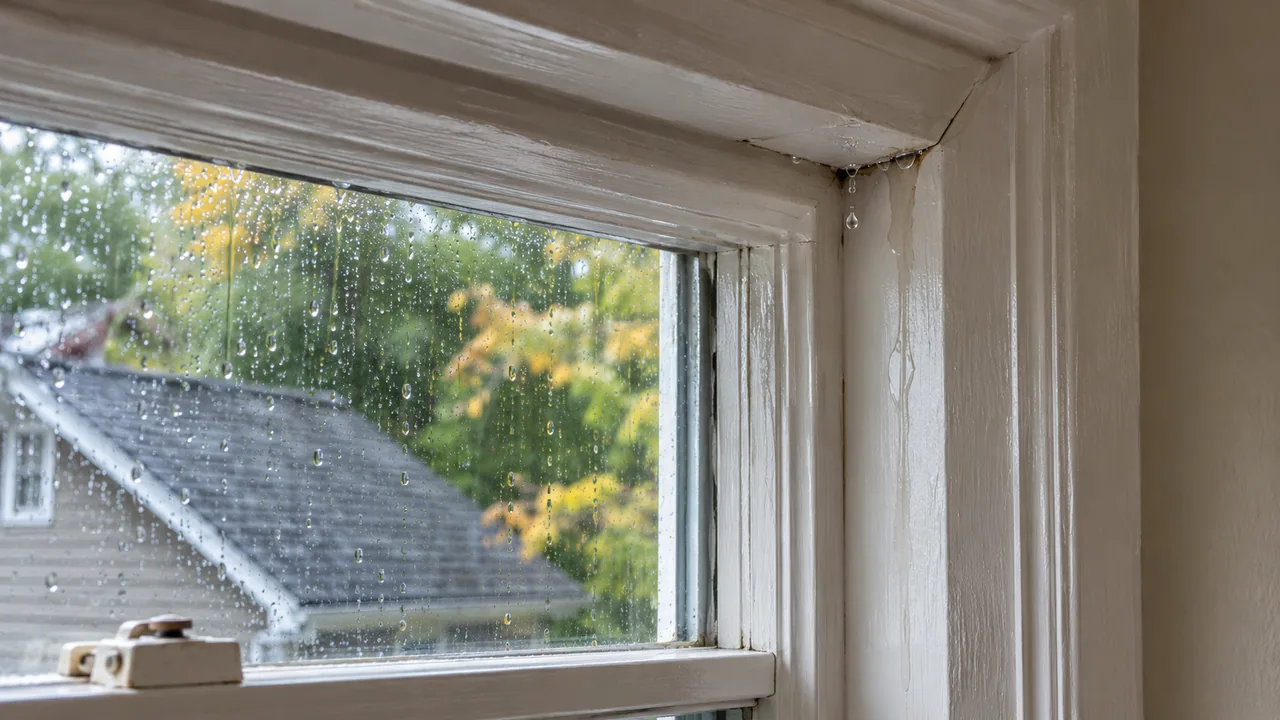
A damp patch on the ceiling after a dry night is easy to blame on the roof. Before anyone seals a joint, ask whether attic condensation could explain the timing. Grand Rapids reached 72°F on October 28, and the station recorded only a trace of precipitation that day and the next. If a mark appeared at your house during that mild stretch, write down the local conditions and whether the mark changed after the next rain.
One wet spot or a wider pattern?
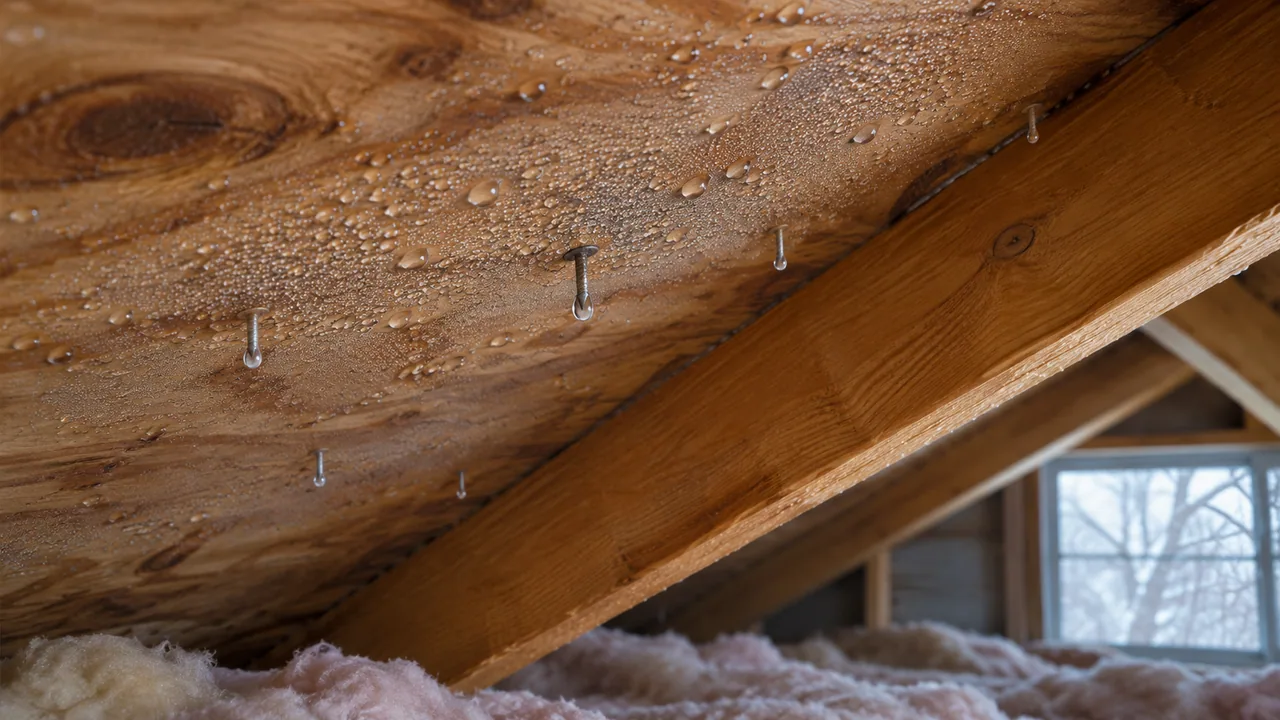
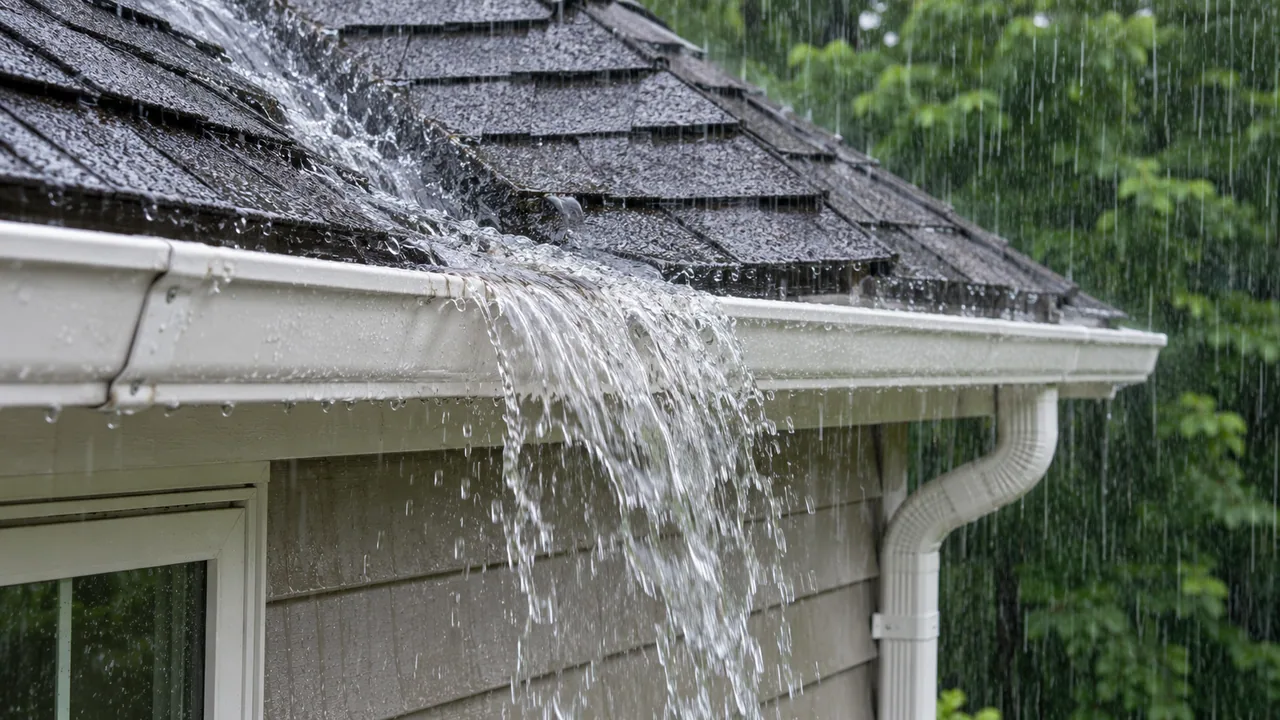
A stain that repeatedly darkens near a chimney during wind-driven rain is a reason to investigate flashing. Beads on many nail tips or a thin film of moisture over a broad area of roof sheathing point the inspection in a different direction. Warm, moist indoor air can reach a colder surface and condense. Both problems can occur in the same attic, so one clue should never settle the diagnosis.
From a safe attic hatch, note what you can see without entering. Is the damp area near the bathroom? Did it appear after showers or after a cold night with no rain? Is the ceiling mark growing? Photograph the same spot in similar light and include the date. If water is actively dripping, arrange a prompt inspection rather than waiting for another weather change.
Track down the source of attic condensation
Ask where the bath fan actually discharges. A fan can sound normal indoors while its duct is loose or ends in the attic. Ask the inspector to check the hatch seal, penetrations from the living space, and whether insulation blocks intake at the eaves. Correcting an indoor air leak or a disconnected duct may be part of the solution.
Our attic ventilation guide explains why intake and exhaust have to work together. If someone recommends a new vent, ask what moisture source they found and how the proposed change addresses it. Contact Horizon for an inspection with the photos and weather notes. A record that includes both wet and dry days is especially useful before West Michigan’s first lasting snow cover hides the exterior clues.