
Spring Thaw & Post-Winter Inspection
March 10, 2026
Commercial Roofing Gutters Residential Roofing Roofing Siding Storm Damage Windows
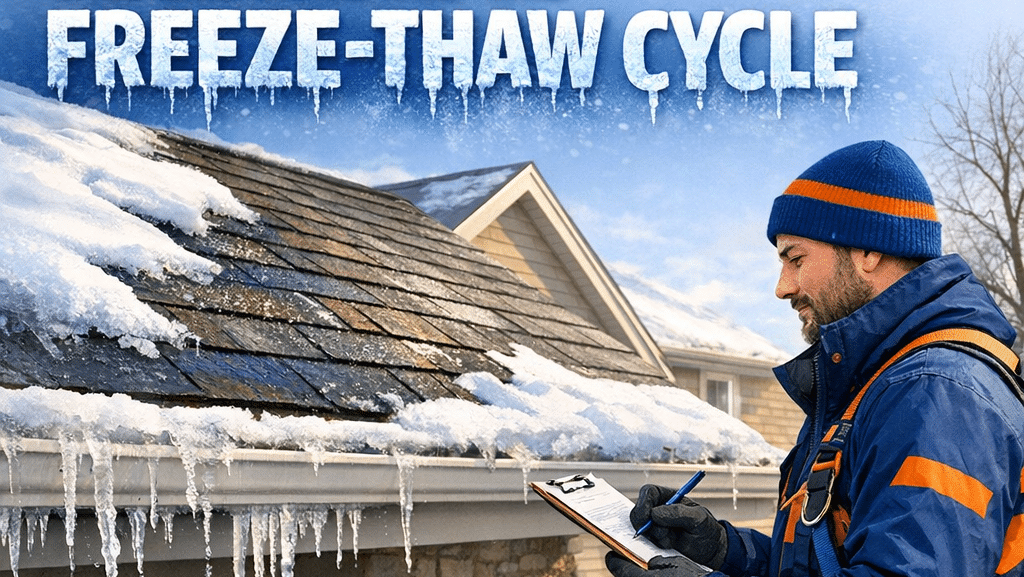
March in West Michigan is the month your roof finally gets a chance to breathe. But don’t mistake the warming temps for an all-clear. The freeze-thaw abuse of January and February leaves behind a trail of damage that’s only now becoming visible. A thorough post-winter inspection in March is one of the most important things you can do to protect your home before spring storms arrive.
By early March, most of the snow and ice has cleared from your roof surface, giving you – and a professional – a clear view of what winter actually did. Shingles that survived a November inspection may now be cracked, curled, or missing granules after months of freeze-thaw cycling. Flashing around chimneys, skylights, and vents may have shifted or separated. Gutters that held up through December can be pulled loose from the weight of ice dams. March is when all of that becomes visible and actionable.
Waiting until summer to deal with winter damage is a gamble. Spring in West Michigan brings heavy rains and occasional severe storms – and a roof weakened by winter is far more vulnerable to those conditions. Catching problems now means you repair on your schedule, not in the middle of a leak emergency.
Start from the ground with a pair of binoculars if you can. Look for shingles that appear lifted, buckled, or absent. Check the gutters for an unusual amount of granule buildup – that grainy material collects in gutters when shingles have lost significant surface integrity. Look along the roofline for any sagging sections that weren’t there in the fall.
Inside, check your attic for any new water staining on the sheathing or rafters. Even a small leak that seeped through during a January thaw may have dried up but left a visible mark. Those marks tell you exactly where your roof is vulnerable before the next rain hits.
West Michigan’s spring storm season can bring high winds, hail, and sustained heavy rain — sometimes all in the same week. A roof with compromised shingles or loose flashing going into that season is a liability. Minor repairs handled in March are a fraction of the cost of emergency repairs in May after a storm has pushed water through an already-weakened spot.
If winter revealed that your roof is nearing the end of its service life, March is also a smart time to start planning a replacement. Roofing contractors’ schedules fill up fast in spring, and getting on the calendar early gives you more flexibility on timing and cost. Explore your replacement options before the spring rush locks up availability.
After a West Michigan winter, gutters often need more than a rinse. Ice dams and heavy snow loads can pull gutters away from the fascia, bend hangers, or crack seams. Walk your perimeter and look for sections that are visibly tilted, separated from the roofline, or showing rust and cracks. Properly functioning gutters are critical for directing spring rain away from your foundation – don’t head into the wet season with a compromised drainage system. Learn more about gutter repair and replacement.
A professional roof inspection after winter gives you a complete, documented picture of your roof’s condition — including areas you can’t safely access yourself. The Horizon Roofing team knows exactly what West Michigan winters do to roofs and what to look for heading into spring. Schedule your post-winter inspection today and go into spring with confidence.
Commercial Roofing Gutters Residential Roofing Roofing

February in West Michigan is a relentless cycle of freeze, thaw, and refreeze — and your roof takes the brunt of it. What started as minor ice buildup in January can turn into serious structural damage by mid-February if left unchecked. This is the month to stay vigilant, not complacent.
When daytime temps creep above freezing and nights plunge back down, water works its way into every small crack, gap, and compromised shingle seam — then expands as it refreezes. Over time, this process forces flashing loose, lifts shingles, and creates entry points for melt water. Even a roof that looked fine in November can develop vulnerabilities by February.
Pay close attention to areas around chimneys, skylights, and valleys where water naturally channels. These are the first places freeze-thaw damage shows up.
Ice dams that formed in January don’t go away on their own — they grow. A dam blocking your eaves forces melt water to back up under shingles and into your attic or walls. Signs you have an active problem include icicles larger than 12 inches hanging from the roofline, water stains on interior ceilings or walls near exterior edges, and visible ice ridges at the eaves.
Do not attempt to chip ice dams off yourself — you risk damaging shingles and creating a serious fall hazard on an icy surface. A professional roof repair team has the tools to safely remove ice buildup without compromising your roof system.
After any significant February storm — whether it’s heavy snowfall, sleet, or an ice event — do a ground-level visual inspection from all four sides of your home. You’re looking for:
If anything looks off, don’t wait for spring. Water doesn’t wait, and a February roof leak can cause significant interior damage within days.
As the freeze-thaw cycle continues, condensation in poorly ventilated attics becomes a real issue. Warm, moist air from living spaces rises into the attic and condenses on cold roof decking — leading to mold, rot, and insulation degradation. Check your attic in February for frost on the underside of the roof deck or any damp, compressed insulation. If you find either, it’s time to address your attic insulation and ventilation setup before spring makes the problem worse.
If you experienced any of the following this winter, a professional inspection is warranted before March arrives:
Catching damage in February gives you a head start on repairs before spring rains arrive — and before every roofing contractor in West Michigan is fully booked. Contact Horizon Roofing for a winter inspection and get ahead of the season.