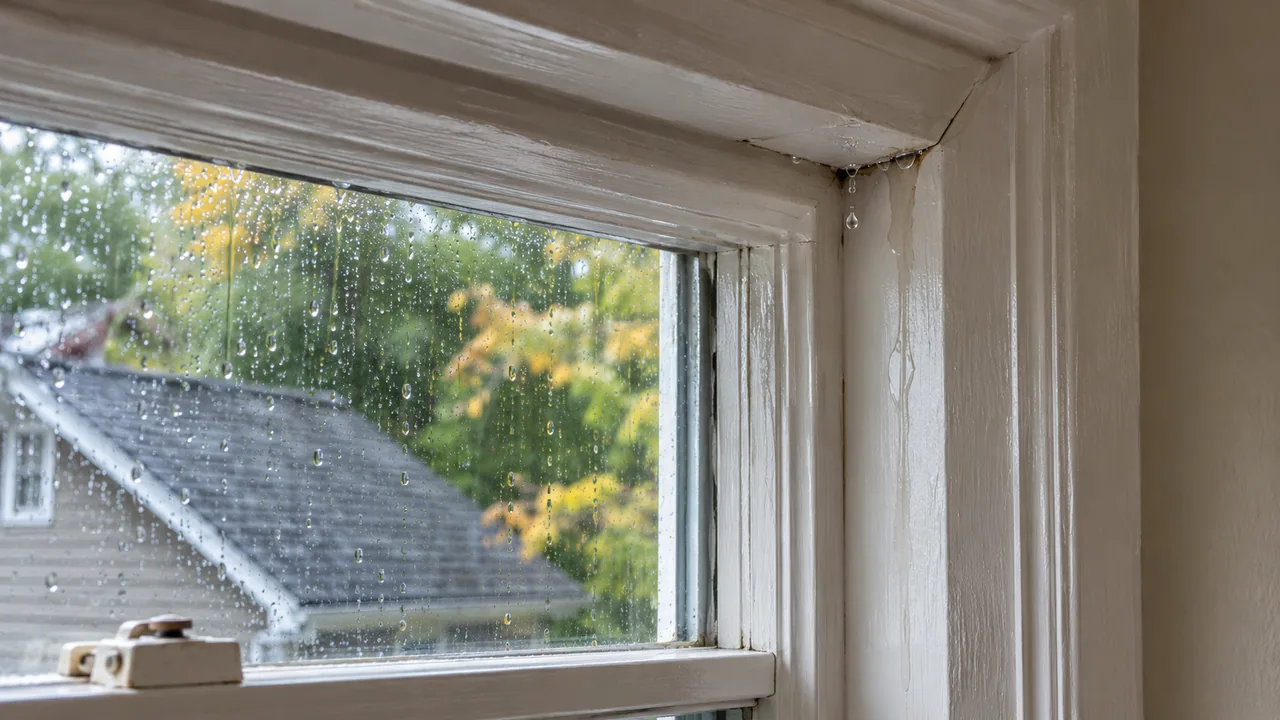
To trace window leaks after rain, look for the first wet spot. A puddle on the sill tells you where the water ended up, but the first bead can tell you where it came in. The Grand Rapids station recorded thunder on August 30 and 31, with 0.53 inch of rain on the 30th and another 0.11 inch the next day. If you noticed water twice, write down whether it appeared along the same edge both times. That detail can help distinguish a window problem from runoff coming down the wall.
Separate three common clues
Water at the top of the interior trim gives an inspector a reason to look above the frame. The head flashing, siding and even a roof-to-wall joint farther up can be involved. A wet lower corner on the side facing the weather calls for a closer look at the sash, seals and drainage path. Fog trapped between panes is a different complaint that can persist after the weather clears.
On a dry day, check whether the window closes evenly and the latch engages. Look at the outside sill from ground level. Some windows have small drainage openings in the frame. Ask the manufacturer or installer where those openings belong before applying caulk. Sealing a designed outlet can trap water.
How to document window leaks after rain
Photograph the first bead of water before wiping the sill. Note whether the window was latched, which side of the house it faces, and whether the gutter above was spilling. If you can see water coming from the eaves, our overflowing gutter guide explains what to check at the outlet. Leave water testing to the installer so the source can be isolated one area at a time.
Repair the opening or replace the unit?
Ask the inspector to distinguish a damaged window from a sound unit with a poorly drained opening. If replacement is recommended, ask how the sill will drain and how the top flashing will tie into the wall. Those details matter even with a brand-new window. Horizon’s window and door team can evaluate the opening with your photos and explain which part of the assembly needs attention.