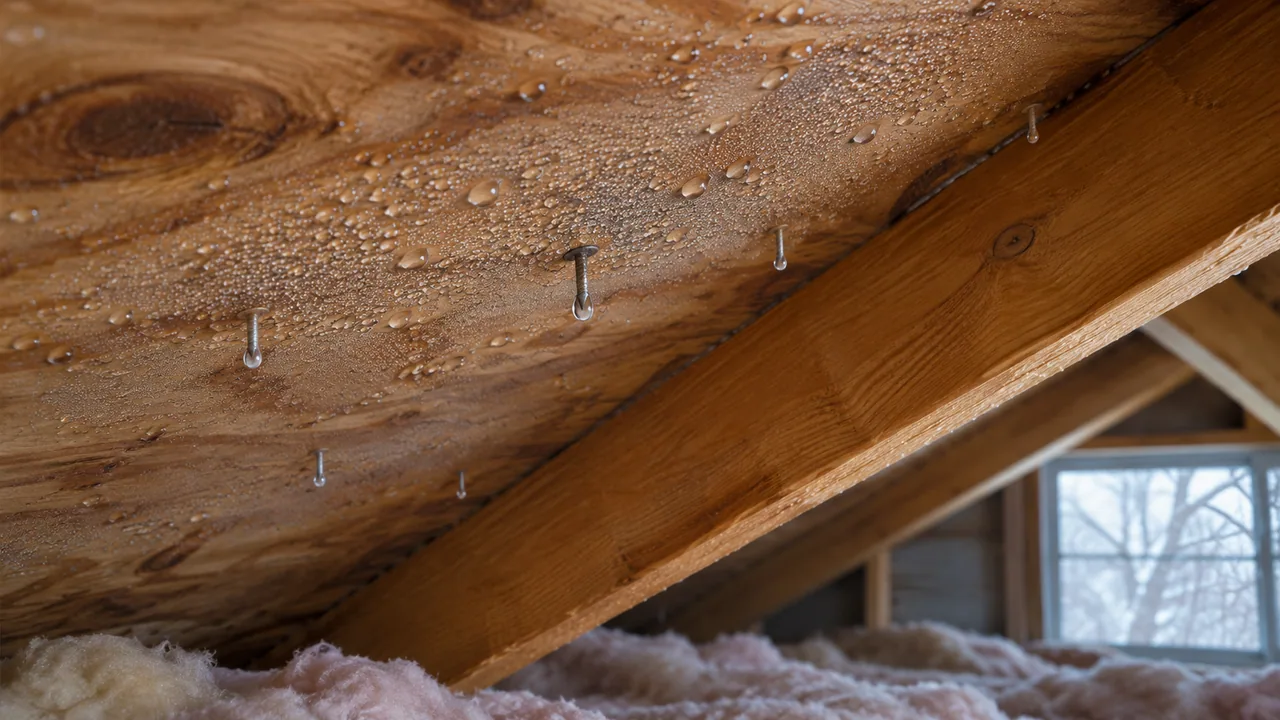
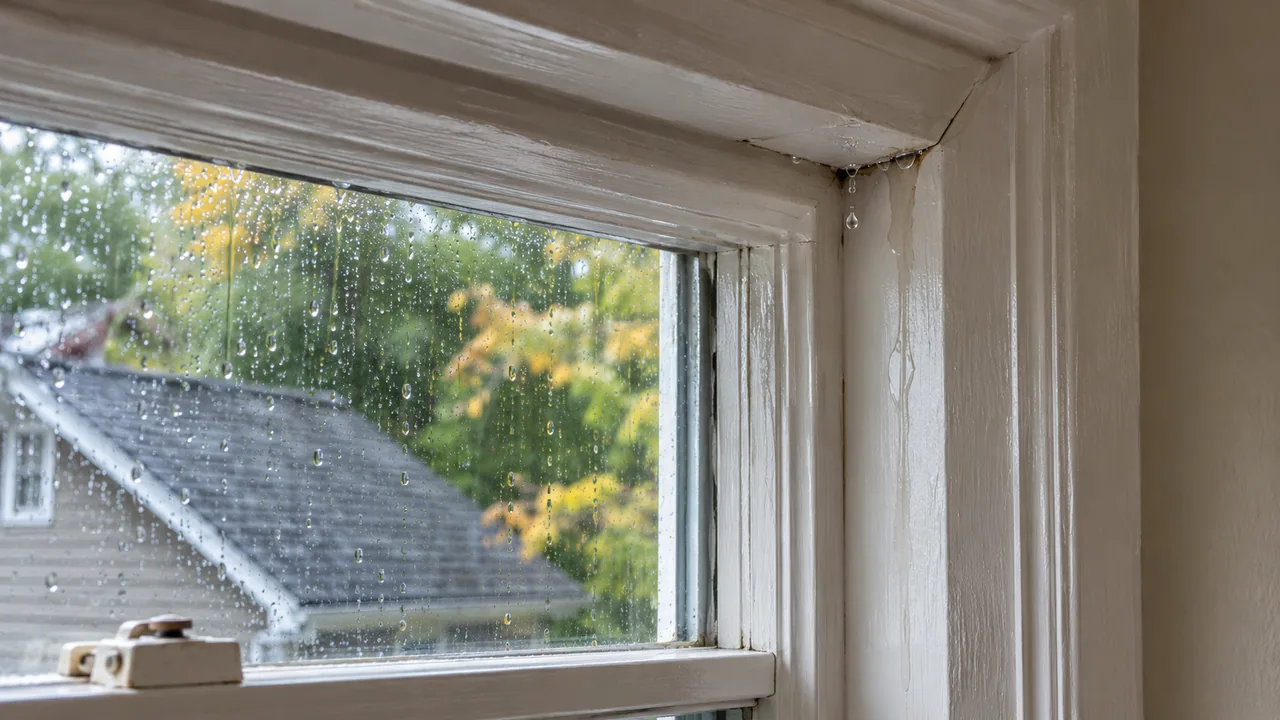
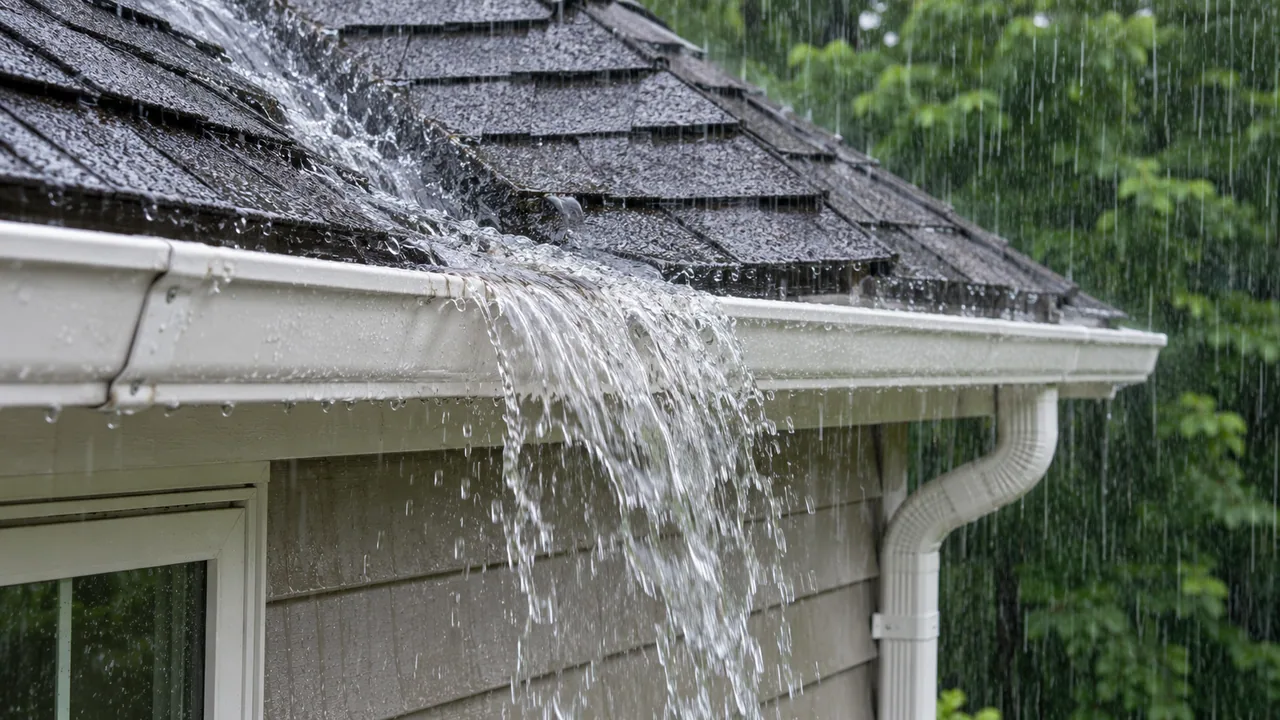
A brown ring appears over the fireplace, yet every shingle you can see from the yard looks straight. That is a good reason to ask about roof flashing repair. On April 27, the Grand Rapids weather station recorded thunder, 0.29 inch of rain and a 41 mph peak wind. Another quarter inch fell on April 29. Two separate rain days give a West Michigan homeowner something useful to compare. Did the same spot get wet both times?
Why the stain can be several feet from the leak
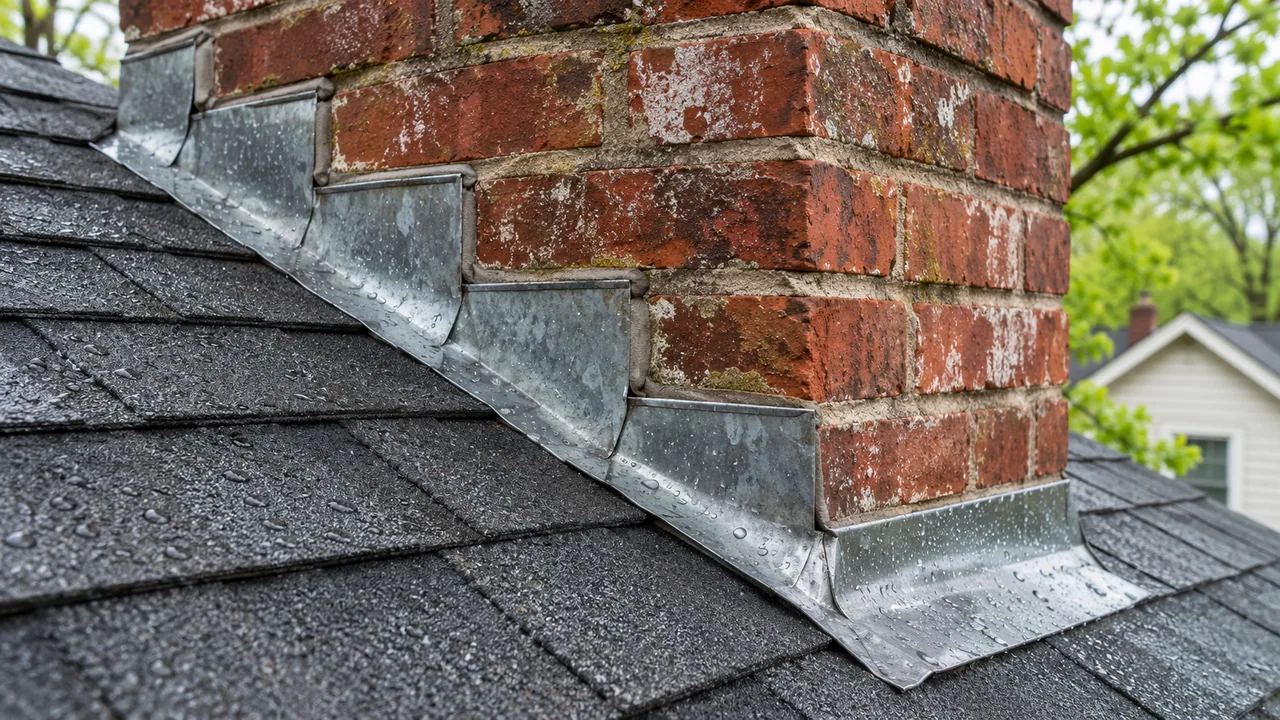
Flashing directs water away from a joint where roofing meets another surface. Along a sidewall, pieces of metal overlap with courses of shingles. At a chimney, counterflashing covers the upper edge of the flashing below. A vent pipe usually has a boot around it. Each detail has to shed water onto the next layer. Water that gets behind one of those layers can follow the decking or a rafter before it reaches drywall.
Write down which room is affected, where the stain sits relative to an outside wall, and when it grew. A photo taken after the rain beside an older picture can tell an inspector more than a fresh coat of ceiling paint. Mention any recent chimney, siding or satellite-dish work near that part of the house.
What to ask before approving roof flashing repair
Ask the roofer to identify the entry point and show how the proposed repair will drain. Will shingles or siding need to come off for access? Can the underlying wood be inspected? At a masonry chimney, is the problem in the roofing detail or in the brickwork above it? The answer changes who needs to do the work.
A bead of sealant across a visible seam might hide the route water takes without correcting the overlap underneath. Request a written scope that names the detail being repaired and what will happen if soft decking is found. If pieces of shingle also turned up in the yard, use our wind damage photo guide before the inspection.
An active drip deserves a prompt call. Contact Horizon Roofing with the room location and dates of the leaks so we can start with the right section of roof.