January Roof Survival: Snow Load, Ice Dams & Winter Storm Damage in West Michigan
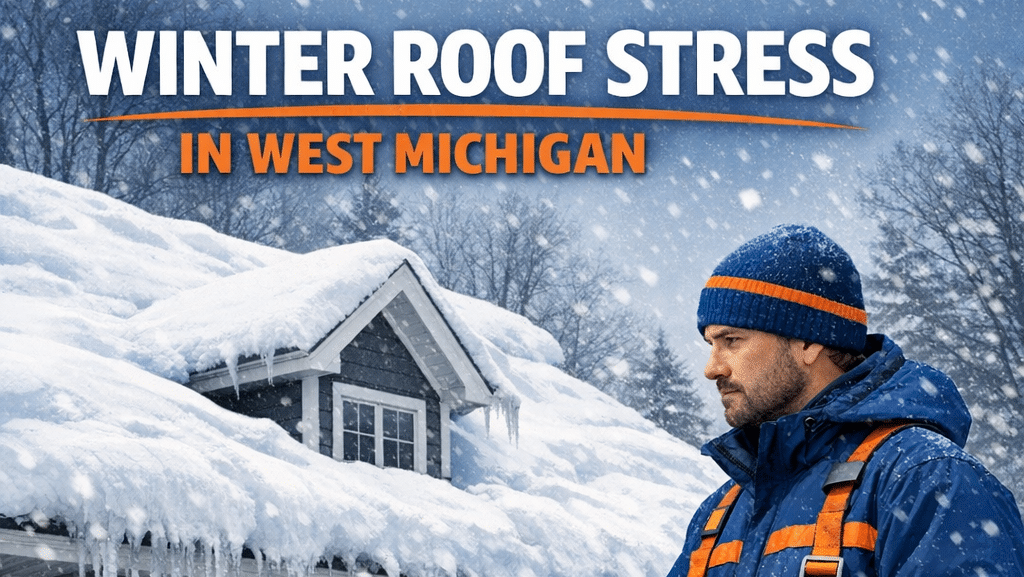
January is peak winter in West Michigan. Heavy snowfall, ice storms, and hard freezes put your roof under more stress than any other month of the year. Most homeowners hunker down and hope for the best — but knowing what to watch for can mean the difference between a quick fix and a major structural repair.
Snow Load: When to Worry
A healthy roof can handle significant snow weight, but there are warning signs that demand attention. If you notice creaking or popping sounds from your ceiling, doors or windows suddenly sticking, or visible sagging in your roofline, those are red flags. Michigan’s wet, heavy snow is far more dangerous than dry powder — it can weigh up to 20 pounds per cubic foot.
Don’t DIY a roof rake on an icy pitch. It’s a fall risk. Call a pro if snow accumulation exceeds 12 inches.
Check your attic after a heavy storm. Look for daylight, frost buildup on the underside of the deck, or wet insulation.
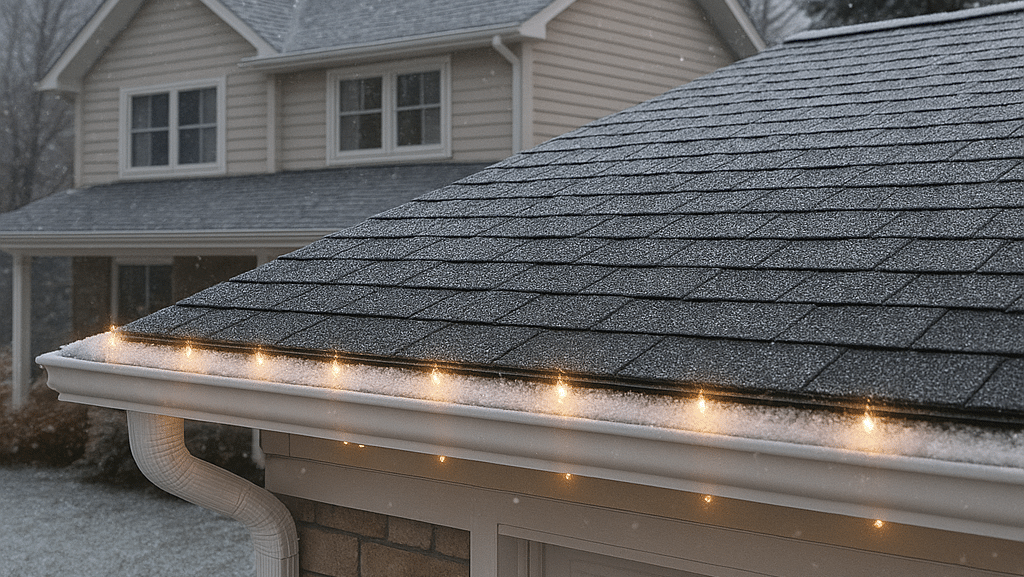
Clear gutters of ice buildup to allow meltwater to drain rather than back up under shingles.
If you spot structural concerns, don’t wait — schedule a roof repair inspection before the next storm hits.
Ice Dam Identification & Action
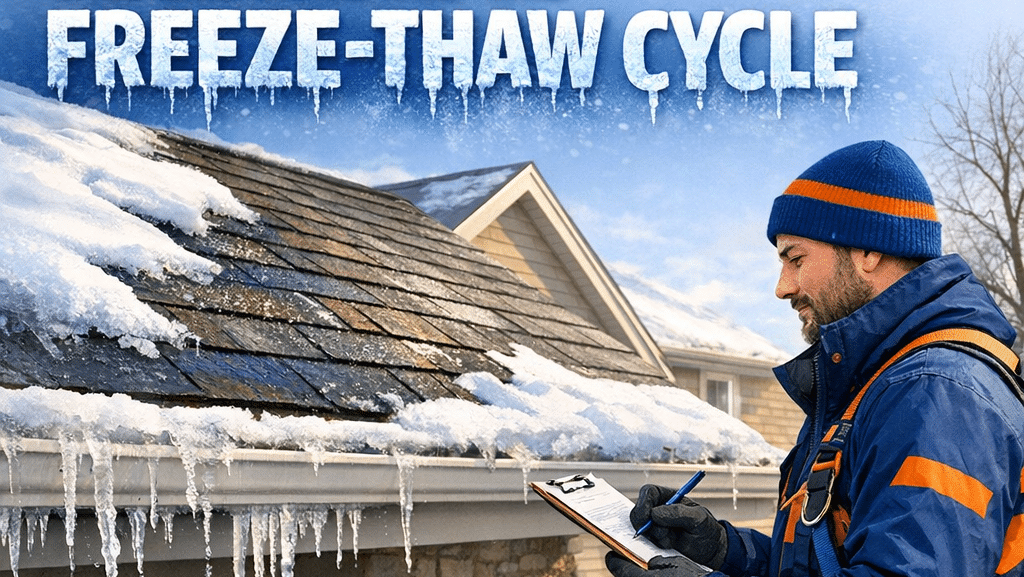
Ice dams are the #1 winter roofing problem in West Michigan. They form when heat escapes through a poorly insulated attic, melts snow on the upper roof, and that water refreezes at the colder eaves. The result is a wall of ice that forces water back up under your shingles and into your home.
Signs of an active ice dam include icicles along the eaves (especially large, wide ones), water stains on interior ceilings near exterior walls, and peeling paint on soffits. If you’re seeing these, the dam is already there.
Short-term, calcium chloride in a mesh stocking laid perpendicular across the dam can help melt a channel for drainage. Long-term, the fix is proper attic insulation and ventilation — that’s what stops them from forming in the first place. Energy.gov’s insulation guide is a solid starting point if you want to understand R-value targets for Michigan’s climate zone.
Emergency Repairs: What Warrants a Call
Some things can wait until spring. Others can’t. Call for emergency service if you notice:
Active interior water intrusion — water dripping from ceilings or running down walls during or after a storm.
Visible missing or displaced shingles after high winds, even in January.
A sagging roofline — this is a structural issue and needs immediate attention.
Horizon Roofing handles emergency roof repairs year-round. Don’t let a small breach turn into a full interior remediation job.
Commercial Roofs in January
Flat and low-slope commercial roofs are especially vulnerable in January. Drainage is critical — ponding water that freezes and thaws repeatedly tears at membrane seams and flashings. Facility managers should check rooftop drains after every significant snow event and schedule a commercial roofing inspection if drainage is slow or seams look stressed.
Don’t Wait for a Leak to Act
January isn’t the month to put roof concerns on hold. A fast inspection now can prevent a major interior damage claim later in the season. Contact Horizon Roofing to schedule a winter assessment — we work year-round so your home doesn’t have to wait until spring.