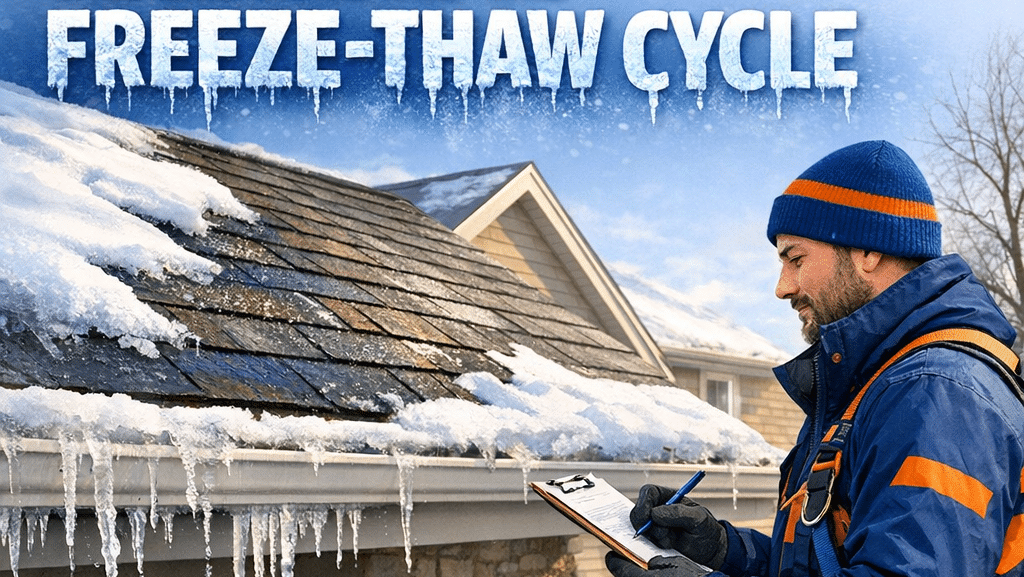
February in West Michigan is a relentless cycle of freeze, thaw, and refreeze — and your roof takes the brunt of it. What started as minor ice buildup in January can turn into serious structural damage by mid-February if left unchecked. This is the month to stay vigilant, not complacent.
The Freeze-Thaw Cycle: Your Roof’s Biggest Enemy
When daytime temps creep above freezing and nights plunge back down, water works its way into every small crack, gap, and compromised shingle seam — then expands as it refreezes. Over time, this process forces flashing loose, lifts shingles, and creates entry points for melt water. Even a roof that looked fine in November can develop vulnerabilities by February.
Pay close attention to areas around chimneys, skylights, and valleys where water naturally channels. These are the first places freeze-thaw damage shows up.
Identify Active Ice Dams Before They Leak
Ice dams that formed in January don’t go away on their own — they grow. A dam blocking your eaves forces melt water to back up under shingles and into your attic or walls. Signs you have an active problem include icicles larger than 12 inches hanging from the roofline, water stains on interior ceilings or walls near exterior edges, and visible ice ridges at the eaves.
Do not attempt to chip ice dams off yourself — you risk damaging shingles and creating a serious fall hazard on an icy surface. A professional roof repair team has the tools to safely remove ice buildup without compromising your roof system.
Post-Storm Inspection: What to Look For
After any significant February storm — whether it’s heavy snowfall, sleet, or an ice event — do a ground-level visual inspection from all four sides of your home. You’re looking for:
Missing or lifted shingles — wind and ice can dislodge shingles even in winter
Sagging roofline sections — a sign of excessive snow load or structural stress
Granule accumulation in gutters or at downspout exits — indicates shingle degradation
Damaged flashing around vents, chimneys, or skylights
If anything looks off, don’t wait for spring. Water doesn’t wait, and a February roof leak can cause significant interior damage within days.
Attic Moisture: The Hidden February Problem
As the freeze-thaw cycle continues, condensation in poorly ventilated attics becomes a real issue. Warm, moist air from living spaces rises into the attic and condenses on cold roof decking — leading to mold, rot, and insulation degradation. Check your attic in February for frost on the underside of the roof deck or any damp, compressed insulation. If you find either, it’s time to address your attic insulation and ventilation setup before spring makes the problem worse.
When to Call for a Winter Roof Inspection
If you experienced any of the following this winter, a professional inspection is warranted before March arrives:
Ice dams that required removal
Snow accumulation over 18 inches on the roof at any point
A significant wind or ice storm event
Any interior ceiling stains or drips, no matter how minor
Catching damage in February gives you a head start on repairs before spring rains arrive — and before every roofing contractor in West Michigan is fully booked. Contact Horizon Roofing for a winter inspection and get ahead of the season.